THE INDIAN CONTRIBUTION TO MATHAMATICS AND SCIENCE
THE FATHER OF
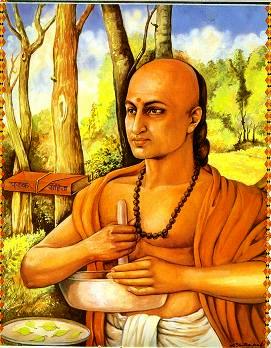
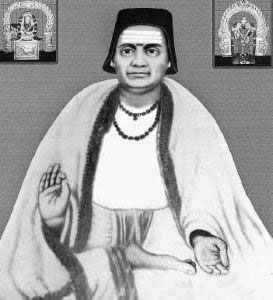
MEDICINE. - Acharya Charak
Born 300 BC Acharya Charak was one of the key contributors to Ayurveda's ancient art and science, medicine and lifestyle system developed in Ancient India. Charya Charak was crowned to be the Father of Medicine. His renowned work, the 'Samhita Charak', is considered an Ayurvedic encyclopedia.
------------------------------------------------------------------------
THE FATHER OF
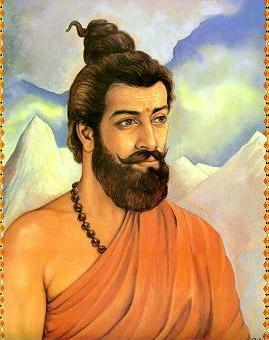
COSMOLOGY - Acharaya kapila
Acharya Kapila, famously known as
the founder of Sankhya Philosophy, contributed to the science of cosmology.
According to him, Prakruti with the motivation of Purusha is the mother of all
cosmic creation
THE FATHER OF
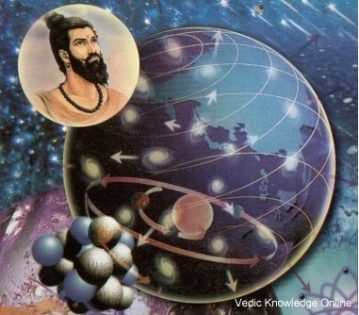
ATOMIC THEORY - Acharya kanada
Modern science credits the atomic theory to an English chemist and physicist named John Dalton (1766-1844). However, not many people are aware that a theory of atoms was formulated approximately 2500 years before Dalton by an Indian sage and philosopher named Acharya Kanada.
FATHER OF
MORDERN YOGA – Acharya patanjali
His text on yoga is known as the
Yoga-sutra. It was composed around 200 BCE. “The Father of Yoga”, compiled 195
sutras, which serve as a framework for making Yoga a daily routine and leading
a moral and responsible life.

---------------------------------------------------------------------------
Value
of Pi, diameter of earth , eclipse – Aryabhatta
(476–500 CE)
gave an even more accurate estimate of the earth's circumference: 24,835
miles. an approximation of pi, 62832/20000 = 3.1416. He also correctly believed that the planets and the Moon shine
by reflected sunlight and that the motion of the stars is due to Earth's
rotation.

PYTHAGORAS THEOREM - Baudhayana
Baudhayana (800 BC - 740 BC) is said to be
the original Mathematician behind the Pythagoras theorem. Pythagoras theorem
was indeed known much before Pythagoras, and it was Indians who discovered it
at least 1000 years before Pythagoras was born! The credit for authoring the
earliest Sulba Sutras goes to him.
Contribution in Arithmetic,
Algebra , Trigonometry,
Calculus , Astronomy , Engineering – Bhaskaracharya
introduced concept of ‘Infinity’
Arithmetic
Bhaskara’s arithmetic text Leelavati covers the
topics of definitions, arithmetical terms, interest computation, arithmetical
and geometrical progressions, plane geometry, solid geometry, the shadow of the
gnomon, methods to solve indeterminate equations, and combinations.
Lilavati
is divided into 13 chapters and covers many branches of mathematics,
arithmetic, algebra, geometry, and a little trigonometry and mensuration. More
specifically the contents include:
Definitions.
Properties of zero (including division, and
rules of operations with zero).
Further extensive numerical work, including use
of negative numbers and surds.
Estimation of π.
Arithmetical terms, methods of multiplication,
and squaring.
Inverse rule of three, and rules of 3, 5, 7, 9,
and 11.
Problems involving interest and interest
computation.
Indeterminate equations (Kuttaka), integer
solutions (first and second order). His contributions to this topic are
particularly important, since the rules he gives are (in effect) the same as
those given by the renaissance European mathematicians of the 17th century, yet
his work was of the 12th century. Bhaskara’s method of solving was an
improvement of the methods found in the work of Aryabhata and subsequent
mathematicians.
His work is outstanding for its systemisation,
improved methods and the new topics that he has introduced. Furthermore the
Lilavati contained excellent recreative problems and it is thought that
Bhaskara’s intention may have be.
Algebra
His Bijaganita (“Algebra”)
was a work in twelve chapters. It was the first text to recognize that a
positive number has two square roots (a positive and negative square root).
His work Bijaganita is effectively a treatise on
algebra and contains the following topics:
Positive and negative numbers.
Zero.
The ‘unknown’ (includes determining unknown
quantities).
Determining unknown quantities.
Surds (includes evaluating surds).
Kuttaka (for solving indeterminate equations and
Diophantine equations).
Simple equations (indeterminate of second, third
and fourth degree).
Simple equations with more than one unknown.
Indeterminate quadratic equations (of the type
ax2 + b = y2).
Solutions of indeterminate equations of the
second, third and fourth degree.
Quadratic equations.
Quadratic equations with more than one unknown.
Operations with products of several unknowns.
Bhaskara derived a cyclic, chakravala method for
solving indeterminate quadratic equations of the form ax2 + bx + c = y.
Bhaskara’s method for finding the solutions of
the problem Nx2 + 1 = y2 (the so-called “Pell’s
equation“) is of considerable importance…
Trigonometry
The Siddhanta Shiromani (written in 1150)
demonstrates Bhaskara’s knowledge of trigonometry, including the sine table and
relationships between different trigonometric functions. He also discovered
spherical trigonometry, along with other interesting trigonometrical results.
In particular Bhaskara seemed more interested in trigonometry for its own sake
than his predecessors who saw it only as a tool for calculation. Among the many
interesting results given by Bhaskara, discoveries first found in his works
include the now well known results for sin(a + b) and sin(a – b)
Calculus
His work, the Siddhanta Shiromani, is an astronomical treatise and contains
many theories not found in earlier works. Preliminary concepts of infinitesimal
calculus and mathematical analysis, along with a number of results in
trigonometry, differential calculus and integral calculus that are found in the
work are of particular interest.
Evidence suggests Bhaskara was acquainted with some ideas of differential
calculus. It seems, however, that he did not understand the utility of his
researches, and thus historians of mathematics generally neglect this
achievement. Bhaskara also goes deeper into the ‘differential calculus‘
and suggests the differential coefficient vanishes at an extremum value of the
function, indicating knowledge of the concept of ‘infinitesimals‘.
There is evidence of an early form of Rolle’s theorem in his work
- If
f (a) = f (b) = 0, then f ‘ (x) = 0 for some x with
a<x<b then
- He
gave the result that if x =(approx) y then sin(y) – sin(x) =(approx)
(y-x) cos(y), thereby finding the derivative of sine, although he never
developed the notion of derivatives.
Astronomy
Using an astronomical model
developed by Brahmagupta in the 7th century, Bhaskara accurately defined many
astronomical quantities, including, for example, the length of the sidereal
year, the time that is required for the Earth to orbit the Sun, as 365.2588
days which is same as in Suryasiddhanta. The modern accepted measurement is 365.2563
days, a difference of just 3.5 minutes !
His mathematical astronomy text Siddhanta Shiromani is written in two parts:
the first part on mathematical astronomy and the second part on the sphere.
The twelve chapters of the first part cover topics such as:
Mean longitudes of the planets.
True longitudes of the planets.
The three problems of diurnal rotation.
Syzygies.
Lunar eclipses.
Solar eclipses.
Latitudes of the planets.
Sunrise equation
The Moon’s crescent.
Conjunctions of the planets with each other.
Conjunctions of the planets with the fixed stars.
The paths of the Sun and Moon.
The second part contains thirteen chapters on the sphere. It covers topics such
as:
Praise of study of the sphere.
Nature of the sphere.
Cosmography and geography.
Planetary mean motion.
Eccentric epicyclic model of the planets.
The armillary sphere.
Spherical trigonometry.
Ellipse calculations.
First visibilities of the planets.
Calculating the lunar crescent.
Astronomical instruments.
The seasons.
Problems of astronomical calculations.
Engineering
The earliest reference to a
perpetual motion machine date back to 1150, when Bhāskara II described a wheel
that he claimed would run forever.
Bhāskara II used a measuring device known as Yasti-yantra. This device could
vary from a simple stick to V-shaped staffs designed specifically for
determining angles with the help of a calibrated scale.
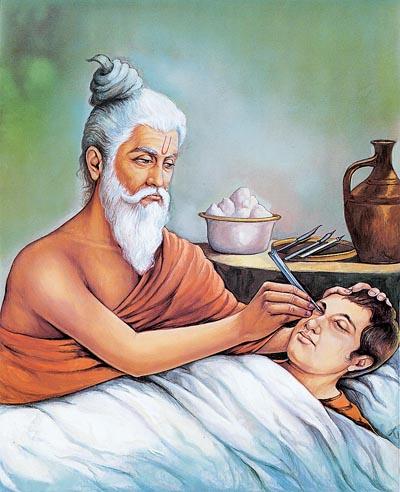
Father of Plastic Surgery – Maharishi Sushruta
Sushruta is considered the "Father of Plastic Surgery." He lived in India sometime between 1000 and 800 BC, and is responsible for the advancement of medicine in ancient India. His book Shusruta samithA.
Bakhshali
manuscript - ancient Indian mathematical text written
The manuscript is a compendium of rules and
illustrative examples. Each example is stated as a problem, the solution is
described, and it is verified that the problem has been solved. The sample
problems are in verse and the commentary is in prose associated with
calculations. The problems involve arithmetic, algebra and geometry, including mensuration. The topics covered
include fractions, square roots, arithmetic and geometric progressions, solutions of
simple equations, simultaneous linear equations, quadratic equations and indeterminate equations of the second
degree.The rules are algorithms and techniques
for a variety of problems, such as systems of linear equations, quadratic
equations, arithmetic progressions and arithmetico-geometric series,
computing square roots approximately,
dealing with negative numbers (profit and
loss), measurement such as of the fineness of gold, etc

Shulba Sutras
The Shulba Sutras are part of the larger corpus of texts called the Shrauta Sutras, considered to be appendices to the Vedas. They are the only sources of knowledge of Indian mathematics from the Vedic period. Unique fire-altar shapes were associated with unique gifts from the Gods. For instance, "he who desires heaven is to construct a fire-altar in the form of a falcon"; "a fire-altar in the form of a tortoise is to be constructed by one desiring to win the world of Brahman" and "those who wish to destroy existing and future enemies should construct a fire-altar in the form of a rhombus". There are multiple commentaries for each of the Shulba Sutras, but these were written long after the original works. The commentary of Sundararāja on the Apastamba, for example, comes from the late 15th century CE[6] and the commentary of Dvārakãnātha on the Baudhayana appears to borrow from Sundararāja.[7] According to Staal, certain aspects of the tradition described in the Shulba Sutras would have been "transmitted orally", and he points to places in southern India where the fire-altar ritual is still practiced and an oral tradition preserved.[8] The fire-altar tradition largely died out in India, however, and Plofker warns that those pockets where the practice remains may reflect a later Vedic revival rather than an unbroken tradition.[4] Archaeological evidence of the altar constructions described in the Shulba Sutras is sparse. A large falcon-shaped fire altar (śyenaciti), dating to the second century BCE, was found in the excavations by G. R. Sharma at Kausambi, but this altar does not conform to the dimensions prescribed by the Shulba Sutras.

----------------------------------------------------
----------------------------
Comments
Post a Comment